A Remembrance of James R. Boylan – Founding Editor, Columbia Journalism Review
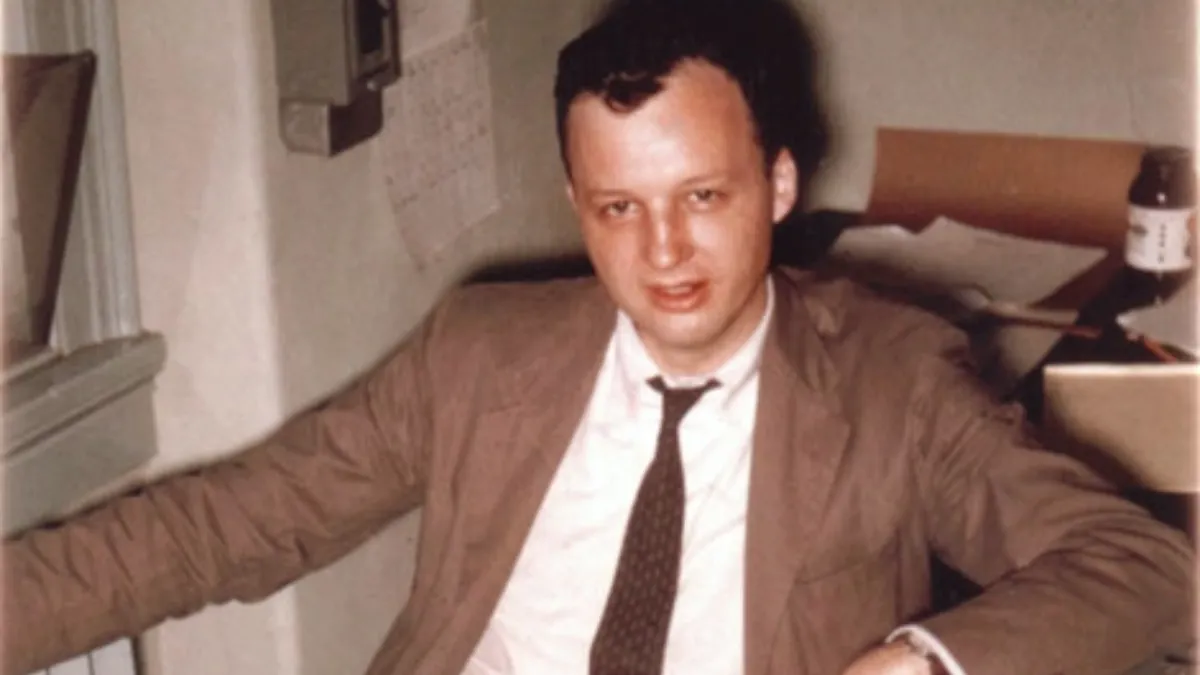
The Iliad, the Greek classic, describes God scattering ashes on some, gold on others.
James R. Boylan got the gold.
His talent as an editor and his insight into the news media allowed him to conceive of the Columbia Journalism Review (CJR) and to serve as its founding editor from 1961 to 1969.
His critical judgment and attention to detail led to a second career as a historian. Boylan wrote a superb history of the J School, “Pulitzer’s School.”
Boylan died on September 29, 2025, at 97—a loss shared deeply by his family, friends, and co-workers, and the many journalism students he taught.
As a member of the Class of ’68, I treasured my time working for Jim on CJR. He was a demanding editor, and one who spotted the foibles of establishment media others didn’t see or conveniently ignored.
Jim was born in Iowa to two high school teachers and graduated from Cornell College, where he majored in English. After earning his journalism degree from Columbia in 1951, Boylan worked for “This Week” magazine and in 1957 joined the J School faculty.
In 1960, Boylan proposed what became the Columbia Journalism Review, a magazine devoted to critiquing journalism. With a few notable exceptions, the media then did little self-criticism, nor did journalism schools.
Dean Edward W. Barrett ’33 welcomed the proposal for a journalism review, which launched in 1961 with a 64-page issue. The magazine’s purpose: “to assess the performance of journalism in all its forms, to call attention to its shortcomings and strengths, and to help define—or redefine—standards of honest, responsible service.”
Journalism professors and working reporters wrote for the new publication. Jim sought out student contributions as well. Gary Gilson ’61, who evaluated newspaper coverage of the Nixon-Kennedy campaign, says, “Jim was a quiet, supportive editor, just the kind of man this rookie needed.”
Boylan’s first stint as CJR editor (he returned from 1976 to 1979) coincided with the big issues of the 1960s: the civil rights movement, Vietnam and antiwar protests, newspaper strikes, and the rise of counterculture.
In 1968, I proposed a critique of Vietnam War press coverage. Jim wisely wanted me to narrow my focus, so I evaluated the fawning, jingoistic, and inaccurate media reports on the Gulf of Tonkin incident, which led to Congress providing the functional equivalent of a declaration of war. My story appeared in a special CJR issue on Vietnam several years later.
Jim was an ideal editor: blunt, but in a kind way. He had a midwestern decency—low-key, engaging, and polite—yet few editors were tougher when it was time to red-pencil your copy. He made me a better writer, and hundreds of others could say the same.
Jim cared about me as a person. The J-School was structured like a full-time job. In addition to CJR, I put in two shifts a week on the desk at The Wall Street Journal. I hit a point where it was all too much and decided to drop out. Jim talked me out of what would have been a foolhardy move, and I’m forever grateful to him.
As the J-School celebrated its 100th anniversary in 2003, Jim’s comprehensive history, “Pulitzer’s School,” detailed the debate over journalism education. The book described the “skills or substance” discussion at Columbia and analyzed, as Boylan wrote, the question of whether a professional “trade” belonged in an Ivy League setting.
After leaving the faculty in 1979, Jim moved to the University of Massachusetts at Amherst, where he taught journalism and history until retiring in 1991.
Jim enjoyed tennis and kayaking with his wife, Betsy Wade, whom he married in 1952. Wade, who died in 2020, was a New York Times editor and columnist who led a successful lawsuit against that paper for sex discrimination.
In a 2011 essay marking the 50th anniversary of CJR, Boylan wrote, “…I used to resist the notion that the magazine would be the most singular item in my obit. Now, looking at how it has flourished for all these decades, I am willing and pleased to have CJR writ next to my name.”