The Examination and The New York Times Win 2026 John B. Oakes Award
The Examination and The New York Times Win 2026 John B. Oakes Award; Inside Climate News and The Washington Post Named Finalists
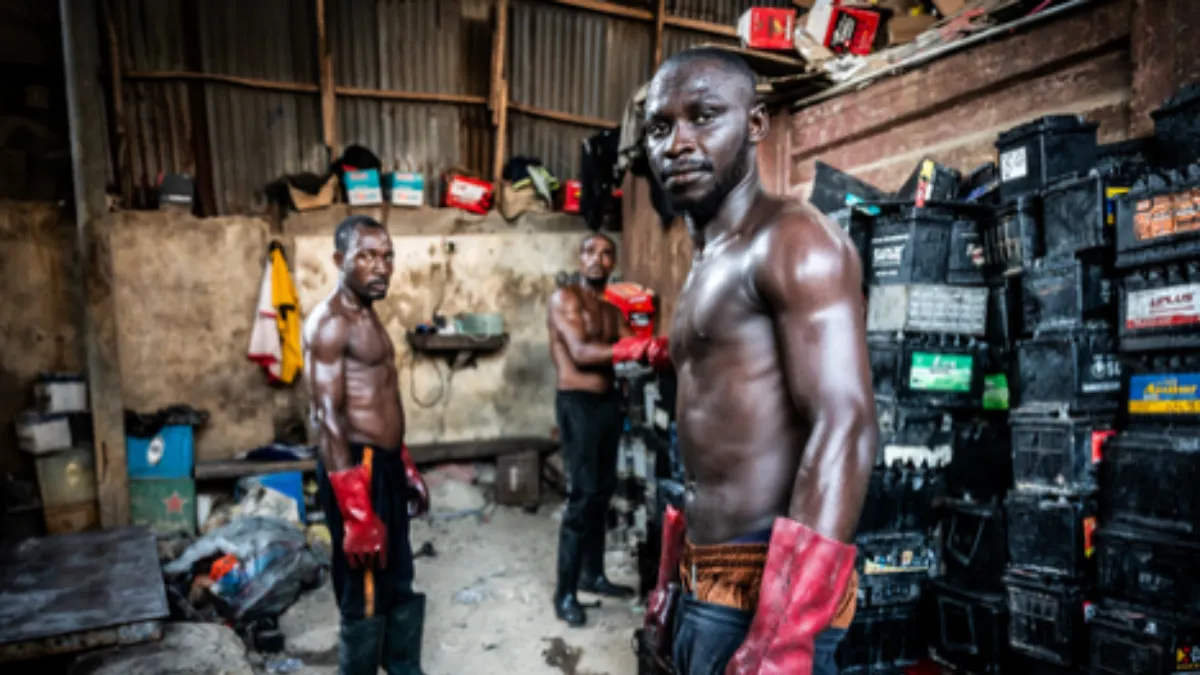
An investigation that exposed a toxic practice by the U.S. auto industry—recycling lead from car batteries that poisoned people in Africa—has won the 2026 John B. Oakes Award for Distinguished Environmental Journalism.
“The Poisonous Lead Trade,” a collaboration between The Examination and The New York Times, revealed the devastating health impacts of the global trade on recycled lead from car batteries. Reporters Will Fitzgibbon and Taylor Turner of The Examination, along with Peter Goodman and Samuel Granados of The New York Times, documented poisonous exposures in Nigerian workplaces and communities from recycled lead that ended up as material for American manufacturers. The team gained the trust of local communities from the outset of the reporting process and worked with an organization to solicit volunteers for blood testing. What they found was stunning; 70% of those tested had lead poisoning, including children. They made sure those who were most impacted had access to their reporting by translating their work into local languages and publishing it on WhatsApp, ensuring the crucial information reached as wide an audience as possible. The list of impacts is long and impressive: U.S. battery makers tightened their rules for suppliers, seven factories shuttered, the Nigerian government ordered a clean up plan and carried out further testing, a video produced by the team was viewed more than two million times, and three automakers said they would better enforce their codes of conduct. The series is part of a project reported in partnership with The Examination, The New York Times, Premium Times, ClassFM, Pambazuko and Truth Reporting Post.
The Two Finalists for the 2026 Oakes Award are:
“Planet China: Beijing’s trillion-dollar development effort is reshaping the globe—and the natural world,” by Katie Surma, Nicholas Kusnetz and Georgina Gustin, Inside Climate News.
"Species That Save Us,” by Dino Grandoni, Mark Johnson, Melina Mara, Saumya Khandelwal, Alice Li, Joshua Lott, Katty Huertas and Hailey Haymond, The Washington Post.
More about the 2026 Oakes Finalists:
Planet China, Inside Climate News
Inside Climate News assembled an ambitious series that scrutinizes the environmental impact of China’s $1.3 trillion initial investment to build a vast network of mines, dams, ports and pipelines in developing countries around the world. For the “Planet China” series, three reporters were dispatched to Africa, Asia and Latin America to show how these mega projects are threatening environmental and public health in ways reminiscent of what China suffered during its own rapid development. Importantly, their reporting went beyond showing specific impacts of specific projects. It showed the larger systems of policies and practices that emphasize speed over caution as bulldozers charge forward, despoiling fragile environments and displacing local communities.
Species That Save Us, The Washington Post
In “Species That Save Us,” writers Dino Grandoni and Mark Johnson put together a compelling series of articles to show the delicate balance of nature and our place in it. When that balance gets disrupted, it can bring about disastrous effects on human health and the loss of peoples’ lives. This series, published in The Washington Post, explores emerging scientific research into the less-understood costs of diminishing biodiversity: how thriving communities of plants and animals can protect human health, while their disappearance can sicken or injure multitudes. Through fine storytelling, the series ground-truths an idea advanced by ecologists that argues for engaging in enlightened self-interest in a rapidly changing world: without saving nature, we cannot save ourselves.
The 2026 John B. Oakes Award winner and finalists will be honored at Columbia Journalism School in September 2026. The winner will receive $5000 in prize money, and the two finalists will each receive $1500.
Given annually for news reporting that makes an exceptional contribution to the public’s understanding of environmental issues, the Oakes Award was founded in 1993 by family, friends and colleagues of John B. Oakes (1913-2001). Oakes was an environmental journalism pioneer and the founder of the modern op-ed page, and the editor of the editorial page for the New York Times from 1961 to 1976.
2026 John B. Oakes Prize Citations:
WINNER: The Examination and The New York Times for “The Poisonous Lead Trade”
Journalists: Will Fitzgibbon and Taylor Turner, The Examination, with Peter Goodman and Samuel Granados of The New York Times
Judges’ Citation:
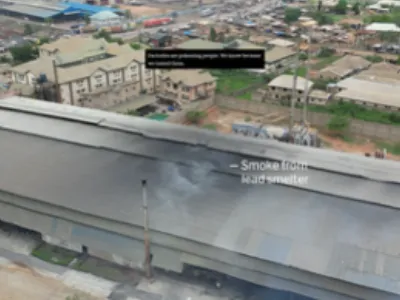
Journalism at its best exposes injustices and leads to corrective action. “The Poisonous Lead Trade,” a collaboration between The Examination and The New York Times, does this in ways that few stories do. With engrossing text and visuals, tenacious reporting and genuine public engagement, it exposed the devastating health impacts of the global trade of recycled lead from car batteries. Reporters Will Fitzgibbon and Taylor Turner of The Examination, along with Peter Goodman and Samuel Granados of The New York Times, documented poisonous exposures in Nigerian workplaces and communities to a level that would never be tolerated in the U.S. And yet, this lead ended up as material for domestic manufacturers. The team gained the trust of local communities from the outset of the reporting process and worked with an organization to solicit volunteers for blood testing. What they found was stunning. Seventy percent of those tested had lead poisoning, including children. They made sure those who were most impacted had access to their reporting by translating their work into local languages and publishing it on WhatsApp, ensuring the crucial information reached as wide an audience as possible. The list of impacts is long and impressive: U.S. battery makers tightened their rules for suppliers, seven factories shuttered, the Nigerian government ordered a clean up plan and carried out further testing, a video produced by the team was viewed more than two million times, and three automakers said they would better enforce their codes of conduct. This excellent piece of environmental and public health journalism should serve as a model for the profession.
FINALIST: Inside Climate News for “Planet China: Beijing’s trillion-dollar development effort is reshaping the globe-and the natural world.”
Journalists: Katie Surma, Nicholas Kusnetz and Georgina Gustin
Judges’ Citation:
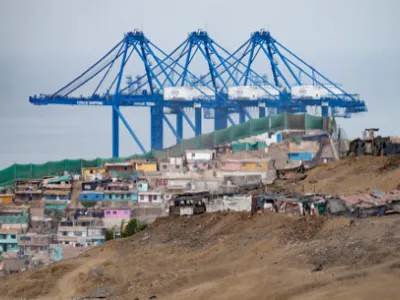
Inside Climate News has assembled an ambitious series that scrutinizes the environmental impact of China’s $1.3 trillion initial investment to build a vast network of mines, dams, ports and pipelines in developing countries around the world. For the “Planet China” series, three reporters were dispatched to Africa, Asia and Latin America to show how these mega projects are threatening environmental and public health in ways reminiscent of what China suffered during its own rapid development. Importantly, their reporting went beyond showing specific impacts of specific projects, such as a hydroelectric dam in Indonesia threatening the extinction of the last 800 Tapanuli orangutans. Instead, it showed the larger systems of policies and practices that emphasize speed over caution as bulldozers charge forward, despoiling fragile environments and displacing local communities. These were not easy stories to do. At best, China’s government is opaque as are its business ventures. At worst, they overwhelm and intimidate any potential critics—something ICN reporter Katie Surma saw firsthand while reporting on a tailings dam collapse in Zambia. That experience inspired another installment in the series. This one focused on the repression, typically exerted by local police, to silence African journalists on behalf of Chinese interests. This trailblazing series connects the dots and unfurls a roadmap for environmental reporting in a globalized economy.
FINALIST: “Species That Save Us,” The Washington Post
Journalists: Dino Grandoni, Mark Johnson, Melina Mara, Saumya Khandelwal, Alice Li, Joshua Lott, Katty Huertas and Hailey Haymond
Judges’ Citation:
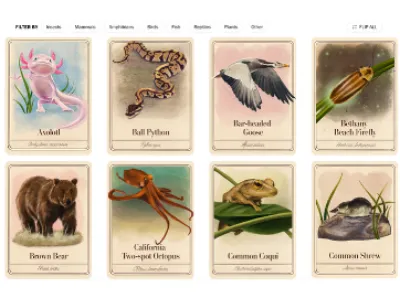
In “Species That Save Us,” writers Dino Grandoni and Mark Johnson put together a compelling series of articles to show the delicate balance of nature and our place in it. When that balance gets disrupted, it can bring about disastrous effects on human health and the loss of peoples’ lives. If we remove too many frogs from Latin American jungles, mosquito-borne malaria cases skyrocket. If we drive vultures to near extinction in India, feral dogs take over as top scavengers and their population explosion brings on soaring cases of dog bites and rabies. And even wolves, despite their fearsome reputation, appear to save humans from injury or death. Scientists are taking note of how wolves moving back into Upper Midwestern States are reducing deer populations running across highways and thus related vehicle collisions. The decline and extinction of species is well chronicled, of course, as are the efforts to save them. This series, published in The Washington Post, explores emerging scientific research into the less-understood costs of diminishing biodiversity: how thriving communities of plants and animals can protect human health, while their disappearance can sicken or injure multitudes. Through fine storytelling and creative graphics, the series ground-truths an idea advanced by ecologists that argues for engaging in enlightened self-interest in a rapidly changing world: Without saving nature, we cannot save ourselves.
John B. Oakes Award Jury
The 2026 John B. Oakes Award Jury: Emilia Askari, an environmental journalist and educator, chair; Talia Buford, assistant managing editor for ProPublica; Jeff Burnside, independent journalist who has spent more than 20 years working as an investigative reporter; Laura Kurtzberg, assistant professor at Florida International University, a data analyst with the Pulitzer Center and the data visualization lead for Ambiental Media; Bernardo Motta, associate professor of journalism at Roger Williams University, educator and researcher; Anna Oakes, independent journalist and audio producer, and granddaughter of John B. Oakes; Susan Phillips, a senior reporter/editor covering climate, energy, and environment as part of the WHYY News Climate Desk; Susanne Rust, environmental reporter with the Los Angeles Times; Mark Trahant, founding editor of Indian Country Today and a member of the American Academy of Arts and Sciences; Kenneth R. Weiss, Pulitzer Prize-winning reporter who writes about science, environment and public health; Justin Worland, Washington D.C.-based senior correspondent at TIME covering climate change and the intersection of policy, politics and society.
About Columbia Journalism School
For more than a century, the school has been preparing journalists in programs that stress academic rigor, ethics, journalistic inquiry and professional practice. Founded with a gift from Joseph Pulitzer, the school opened its doors in 1912 and offers Masters of Science, Masters of Arts, a joint Master of Science degree in Computer Science and Journalism, and Doctor of Philosophy in Communications. It houses the Columbia Journalism Review, the Brown Institute for Media Innovation, and the Tow Center for Digital Journalism. The school also administers many of the leading journalism awards, including the Alfred I. duPont-Columbia University Awards, the Maria Moors Cabot Prizes, the John Chancellor Award, the John B. Oakes Award for Distinguished Environmental Journalism, Paul Tobenkin Memorial Award, and the Meyer “Mike” Berger Award.