Four Accomplished Writers Named 2026–2027 Spencer Education Fellows at Columbia Journalism School
This year’s cohort brings investigative rigor and diverse storytelling to major issues shaping schools and families across the U.S.
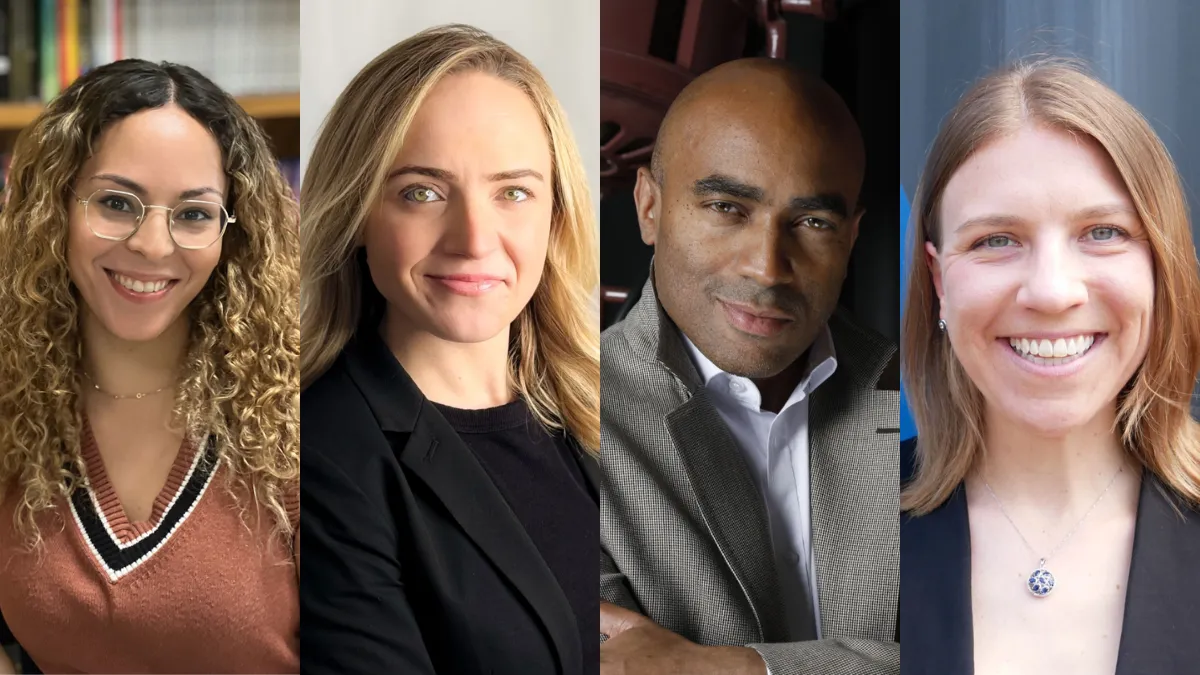
Four accomplished writers will join Columbia Journalism School for the 2026-2027 academic year as the next group of Spencer Education Journalism Fellows who will work with researchers and mentors at the university to produce significant works of education journalism.
This class of 2027 brings immense skills as well as diversity of professional background and storytelling form to the fellowship, which was launched with Spencer Foundation support 19 years ago to enhance education journalism through deep research.
The group includes residential fellow Liz Bell, a journalist for EdNC, a nonprofit news site focused on education in North Carolina, who will study lessons learned from the first attempts at universal child care in the United States.
There will be three non-residential fellows. Madison Hopkins, a freelance investigative reporter who most recently worked for the Better Government Association, will explore caregiver burnout in families raising autistic children. Lee Hawkins, an author and podcast creator who spent many years on the staff of The Wall Street Journal, will investigate the persistence and legacy of corporal punishment in American public schools. And Gabriela Goitía-Vázquez, a writer and award-winning high school educator in Miami-Dade Public Schools, will create a narrative atlas documenting the relationship between climate disaster and educational disruption in the United States.
A distinguished board of scholars and journalists selected the winners this spring from a record number of applications and after a month of careful review. The Spencer Foundation awards each fellow with project expenses plus a stipend ($85,000 residential, $43,000 non-residential). Furthermore, the fellows receive research and journalistic support at the Journalism School as well as throughout the university.
“These diverse journalists, writers and educators collectively come with two Pulitzer nods and years of rich and relevant experience both on the education beat and leading America’s classrooms. I am confident that they will bring dynamic ideas and vision to the Spencer fellowship community, the Journalism School, and the field of education journalism writ large,” said Sarah Carr, director of the Spencer Fellowship, who, as a fellow in 2010-11, reported “Hope Against Hope,” about New Orleans schools. “Their timely and creative projects were chosen from a highly competitive pool of applicants. We look forward to welcoming them in the fall to a network of over 50 fellows who have produced impactful books, documentaries, magazine articles, podcasts, and more.”
For more on the Spencer Education Journalism Fellowship, visit: https://spencerfellows.org
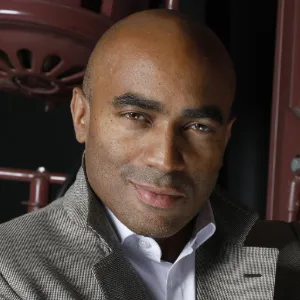
Lee Hawkins is a Pulitzer Prize-finalist investigative journalist and author whose work examines the intergenerational effects of violence, trauma, resilience, and government-sanctioned violence and atrocities on Black American families and other families across the United States. He is the author of I Am Nobody’s Slave: How Uncovering My Family’s History Set Me Free, a critically acclaimed memoir that traces 400 years of his family’s history through investigative reporting, DNA analysis, and archival research. The book was nominated for a 2026 NAACP Image Award for Outstanding Literary Work. It was also named an Oprah Daily Black History Month pick, and Amazon selected it as an Editor’s Pick and Best History Book. Hawkins is the creator, co-producer, and narrator of the 2024 long-form podcast series What Happened in Alabama? and 2025's Unlocking the Gates for American Public Media.
He was part of The Wall Street Journal team named a Pulitzer Prize finalist in 2022 for coverage of the 1921 Tulsa Race Massacre and is the recipient of numerous honors and fellowships, including the Rosalynn Carter Fellowship for Mental Health Journalism and the O’Brien Fellowship for Public Service Journalism at Marquette University. Hawkins is a six-time winner of the National Association of Black Journalists’ Salute to Excellence Award and a two-time Gerald Loeb Award finalist.
Previously, Hawkins spent 19 years at The Wall Street Journal as a reporter, editor, and on-camera journalist. His tenure there included covering New York City public schools, with particular attention to how the pandemic affected the nation’s largest school system and its students.
As a Spencer fellow, Hawkins will investigate the persistence of corporal punishment in American public schools, especially its impact on Black children and communities.
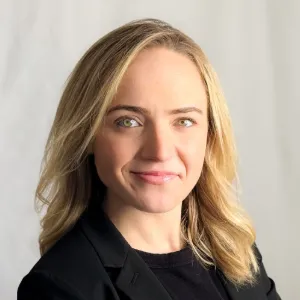
Liz Bell has covered education in North Carolina for a decade for the nonprofit publication EdNC, copublishing work in national outlets including The 74 Million, The Hechinger Report and Early Learning Nation. In recent years, she has been the only reporter in the state focused on the early childhood beat, investigating the child care crisis, its effects on children, families and communities, and emerging solutions. Her work is routinely cited by state policymakers and early childhood researchers.
Recent coverage includes stories on the rise of early childhood apprenticeships, a look at community colleges’ strategies to serve parenting students, and a deep dive on the needs of in-home child care providers. Bell is an alumna of The University of North Carolina at Chapel Hill’s Hussman School of Journalism and Media.
During her fellowship year, Bell will study some of the first American attempts at universal child care and their lessons for the rest of the country. As some states and communities make historic early childhood investments, Bell will examine how these efforts impact not only young children and their families but our collective understanding of education in the early years.
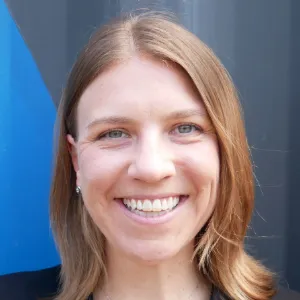
Madison Hopkins is a Pulitzer Prize–winning investigative reporter focused on public accountability and the systems that shape people’s daily lives. Most recently, she was a senior investigative reporter with the Illinois Answers Project, the nonprofit newsroom of the Better Government Association in Chicago.
In 2022, Hopkins and Chicago Tribune reporter Cecilia Reyes won the Pulitzer Prize for Local Reporting for “The Failures Before the Fires,” a yearlong investigation into Chicago’s lax enforcement of building code violations. The project documented dozens of fatal fires in buildings long known to city officials as dangerous, revealing systemic failures in oversight and accountability.
Hopkins’ past work includes reporting on environmental oversight, disability services, early childhood systems, and other areas where government responsibility intersects with vulnerable populations.
As a Spencer fellow, Hopkins will investigate the structural drivers of caregiver burnout and mental health strain among families raising autistic children. Her reporting will examine how the systems and communities that families rely on can better support caregivers and help autistic children thrive.
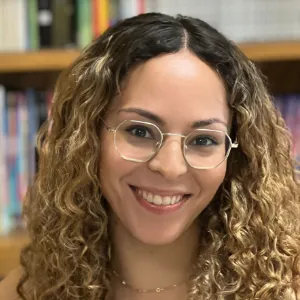
Gabriela Goitía Vázquez is an educator, writer, and media-maker. While teaching AP Human Geography, Spanish Literature, and English Composition in Miami-Dade Public Schools, she prioritized place-based learning, storytelling, and mapmaking as methods for engaging students and empowering communities. Her work as an educator has been recognized by the National Book Foundation and the National Endowment for the Humanities. She is a former rookie teacher of the year in Miami-Dade. Goitía Vázquez is a graduate of the University of Pennsylvania and earned a master’s in computing in education from Columbia’s Teachers College.
As a Spencer fellow, Goitía Vázquez will create a narrative atlas exploring the relationship between schools and storms, paying particular attention to how climate disasters have impacted educational trajectories, how schools can serve as recovery sites during and after disasters, and how to protect schools and children when climate crises occur.