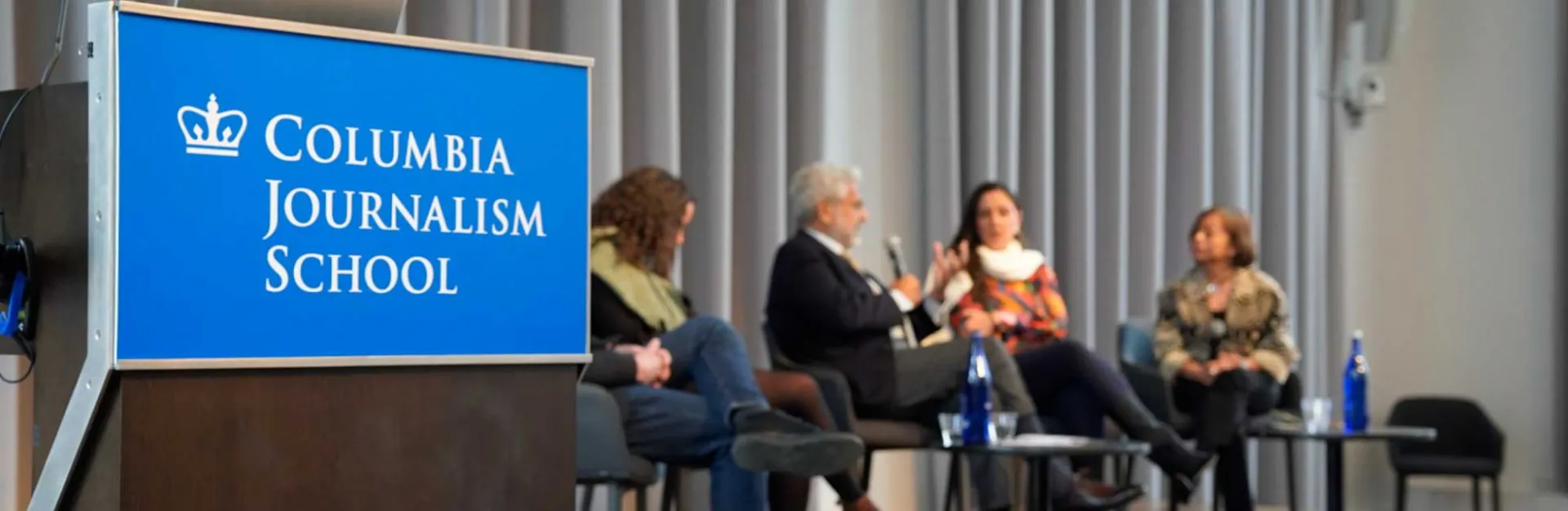
“I don’t think it’s an exaggeration to say that
we’re currently in a moment of democratic crisis.”
– Dean Jelani Cobb, at the 2023 Faultlines: Democracy conference
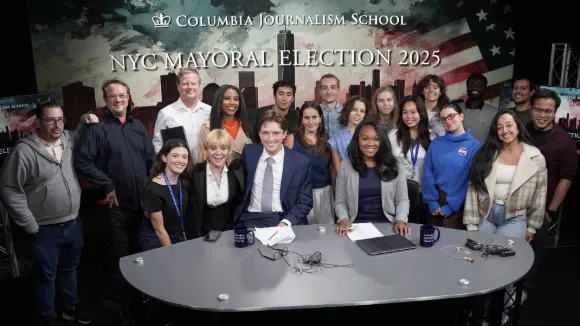
Columbia Journalism School is addressing the crucial role of journalism in this historic moment in several ways. We are redoubling our long-standing efforts to help American (and indeed global) democracy move forward at a precarious time. This happens on many fronts, and what follows here is a mere sample of that vibrant school-wide endeavor.
The offerings – whether in the classroom, in newsrooms or in the city of New York – are numerous, all demonstrating a deep commitment to the role of journalism in sustaining democracy around the world.
Training
Columbia Journalism School gives every student a solid grounding in accountability reporting, the very foundation of journalism that best serves democracy. This includes required coursework in investigative techniques, taught through the Toni Stabile Center for Investigative Journalism, aimed at holding powerful people and institutions to account.
The Stabile Center also runs an investigative journalism specialization to prepare students for careers in investigative reporting. Other coursework includes City Newsroom with an emphasis on New York City government and on holding local institutions accountable.
Students, faculty and leadership are committed to enhancing democracy through impactful events and workshops.
Students will also undertake a comprehensive election project by reporting from New York City and gathering stories nationwide for Columbia News Service. After the election, a collaborative program between Columbia Journalism School, the Institute of Global Politics and the University’s Office of the President will analyze the election results.

Research and Tools
The Lipman Center for Journalism and Civil and Human Rights provides grants to working journalists, many of which focus on criminal justice and how democratic institutions may be failing the people they are meant to serve.
Among many projects, The Li Center for Global Journalism is leading an exploration of the troubling dynamics between foreign and local journalists in producing global reporting – particularly the inequities faced by so-called “fixers.” Toward that end, the center has conducted dozens of interviews with local journalists in places such as Somalia, Gaza, Russia, Ukraine, Sudan and Iran.
Columbia Global Reports, headed by former CJS dean Nicholas Lemann, publishes books based on deep reporting across the globe, many of which illuminate democratic principles and the forces that would destabilize them.
These include: "Left Adrift: What Happened to Liberal Politics" and "The Lie Detectives: In Search of a Playbook for Winning Elections in a Disinformation Age."
Ethics and Standards
Columbia Journalism Review, the nation’s premier press journal, publishes criticism, reporting, and commentary about the media and its role in democracy. It aptly calls itself “the voice of journalism,” serving to question the news media’s practices and to maintain its standards. Underlying its work is the concept that if we journalists are to hold other institutions and individuals accountable, we must do the same in our own craft.
In addition, the Craig Newmark Center for Journalism Ethics and Security has launched a project to reexamine the practices and standards of newsrooms, particularly in this new era so affected by artificial intelligence, and is revamping the school’s ethics curriculum, a requirement for all master's students.
Learn more from Newmark Center Director Anika Collier Navaroli, ‘13 M.S., on the evolving challenges and importance of press freedom.
“In order to be a safeguard of democracy, journalism itself must be democratic,” Dean Cobb has written. This means that journalism education must be accessible, and the school is working hard to make that happen.
Such efforts include the Loan Repayment Assistance Program (LRAP). The program may lend up to $10,000 a year to eligible graduates working in local news to make their loan payments, and then forgive that loan. In addition, each year a dozen or more summer fellowships allow CJS graduates to work on accountability projects while embedded in local and investigative newsrooms in the United States.
Meet the Faculty
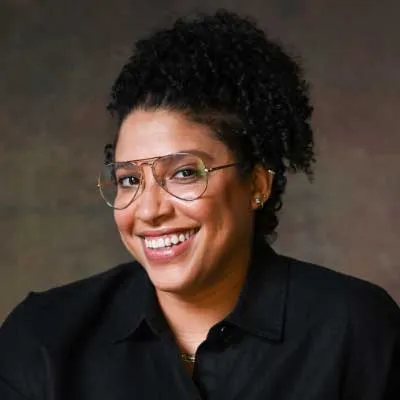
Craig Newmark Assistant Professor of Professional Practice
Director, Craig Newmark Center for Journalism Ethics and Security
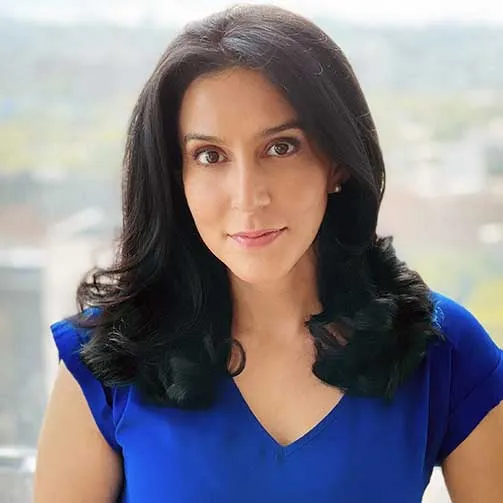
Patti Cadby Birch Assistant Professor of Journalism
Director, Simon and June Li Center for Global Journalism
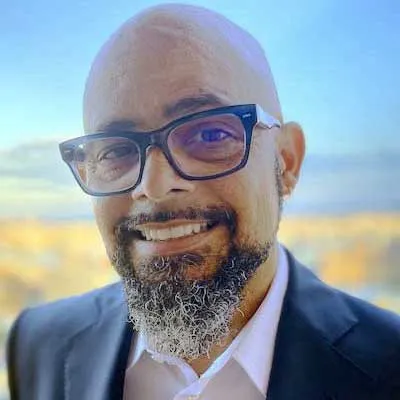
Ira A. Lipman Associate Professor of Journalism
Director, Ira. A. Lipman Center for Journalism and Civil and Human Rights
Director, Documentary Journalism Program
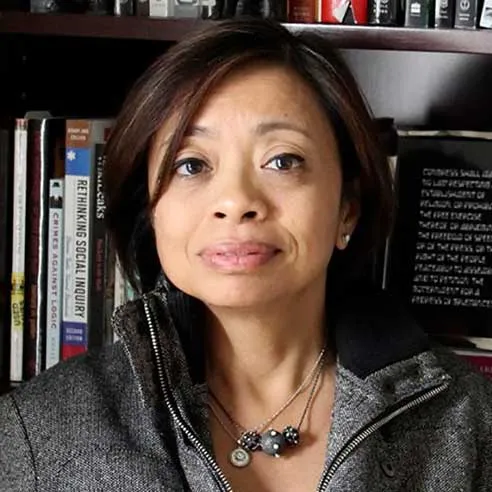
Toni Stabile Professor of Professional Practice in Investigative Journalism
Director, Toni Stabile Center for Investigative Journalism
Democracy News
Leading Open Source & Visual Investigations Journalist Haley Willis Joins Li Center As Associate Director
Willis will help students build skills in open source reporting and visual investigations.
Julie K. Brown of the Miami Herald Wins Prestigious 2026 John Chancellor Award
The Chancellor Award is presented each year to a journalist for their cumulative accomplishments.
Columbia Journalism School Appoints Sharyn Alfonsi and Scott Pelley as Journalists in Residence
Award-winning journalists will mentor students, pursue reporting projects and bring decades of newsroom experience to Columbia.