The WERT Global Prize
The WERT Global Prize honors excellence in business journalism by a woman for work that fosters a greater understanding of global business. It was established in 2018 with funding by a bequest from The Women’s Economic Round Table (WERT) and has received support from the Muriel F. Siebert Foundation and the global management consulting firm McKinsey & Company.
The recipient of the prize receives $2,000.
Submissions for the 2026 WERT Global Prize are now closed.
Submitted work must be by a woman. Shared bylines by women are allowed (the prize will be split).
Entries must be in English. International entries are welcome.
Work must be published or broadcast by a recognized media outlet (print, audio, video, digital).
Self-nominations are accepted.
Books, films, podcast series and self-published work are not eligible.
One to three pieces of business reporting.
PDFs or links to stories and access credentials if they are behind a paywall.
Transcripts of audio/video submissions.
A brief cover letter with a short nominee bio.
- A $50 non-refundable entry fee submitted at Columbia's SecurePay website.
Questions? Write to [email protected]
2026 Winner: Reem Makhoul, Business Insider
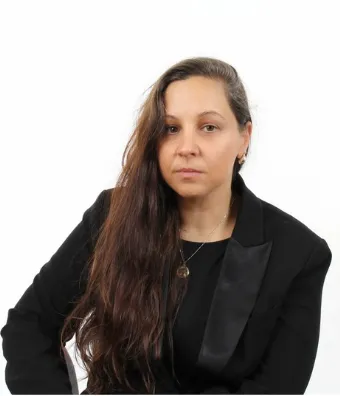
This year’s WERT Global Prize, which recognizes outstanding business reporting by a woman, was awarded to Reem Makhoul, a video producer from Business Insider whose dynamic reporting on Gaza addressed the war from a business angle. In her short documentary, “We Mapped Out Gaza’s Deadly Food Economy,” Makhoul explained how citizens in Gaza find food and pay for it in a broken economy. Through her reporting, Makhoul explored how hyperinflation turned staples like flour into an unaffordable luxury, and exposed why humanitarian aid was being sold to those in need.
Utilizing her contacts on the ground and local knowledge, Makhoul remotely produced footage in Gaza captured by a freelance videographer who went undercover to film currency dealers charging commissions of up to 50%. Her reporting exposed the everyday struggle for food, the effects of war, and how the lives of people in Gaza have been impacted by a damaged banking system.
“Makhoul's detailing of the collapse of Gaza's economy is a remarkable use of video to explain the often complicated topics of supply and demand, currency, and logistics,” said WERT judge Kimberly Johnson. “In following the difficult and dangerous path Gazans take to secure a basic staple such as flour, she not only tells a gripping tale, but offers viewers greater insight and understanding of the financial implications of war.”
Past Winners
2025
Wall Street Journal Reporters Shalini Ramachandran, Khadeeja Safdar, AnnaMaria Andriotis, Jenny Strasburg Knight-Bagehot Class of 2006 and Suzanne Vranica for a series exposing workplace discrimination and harassment at the World Economic Forum, sponsor of the Davos gatherings.
2024
Olivia Carville, Bloomberg News, for a series of stories that masterfully drove home the many dangers of social media to the mental health and safety of young people.
2023
Hannah Dreier, The New York Times, for "Alone and Exploited, Migrant Children Work Brutal Jobs Across the U.S," which exposed a migrant child labor scandal involving some of the world’s largest corporations.
2022
Olivia Carville, Bloomberg, for "Airbnb’s Nightmare," which revealed how Airbnb's elite trust-and-safety team works to keep crime and safety violations at Airbnb properties out of the news.
2021
Dana Mattioli, The Wall Street Journal, for “How Amazon Wins: By Steamrolling Rivals and Partners," on the company’s use of data and inside information to undersell competitors.
2020
Erika Fry, Fortune, for "Epidemic of Fear," on the tragic course of a vaccine against dengue fever.
2019
Lisa Girion, Reuters, for “Powder Keg," an investigation into Johnson and Johnson’s extensive knowledge of the existence of asbestos in its baby powder.