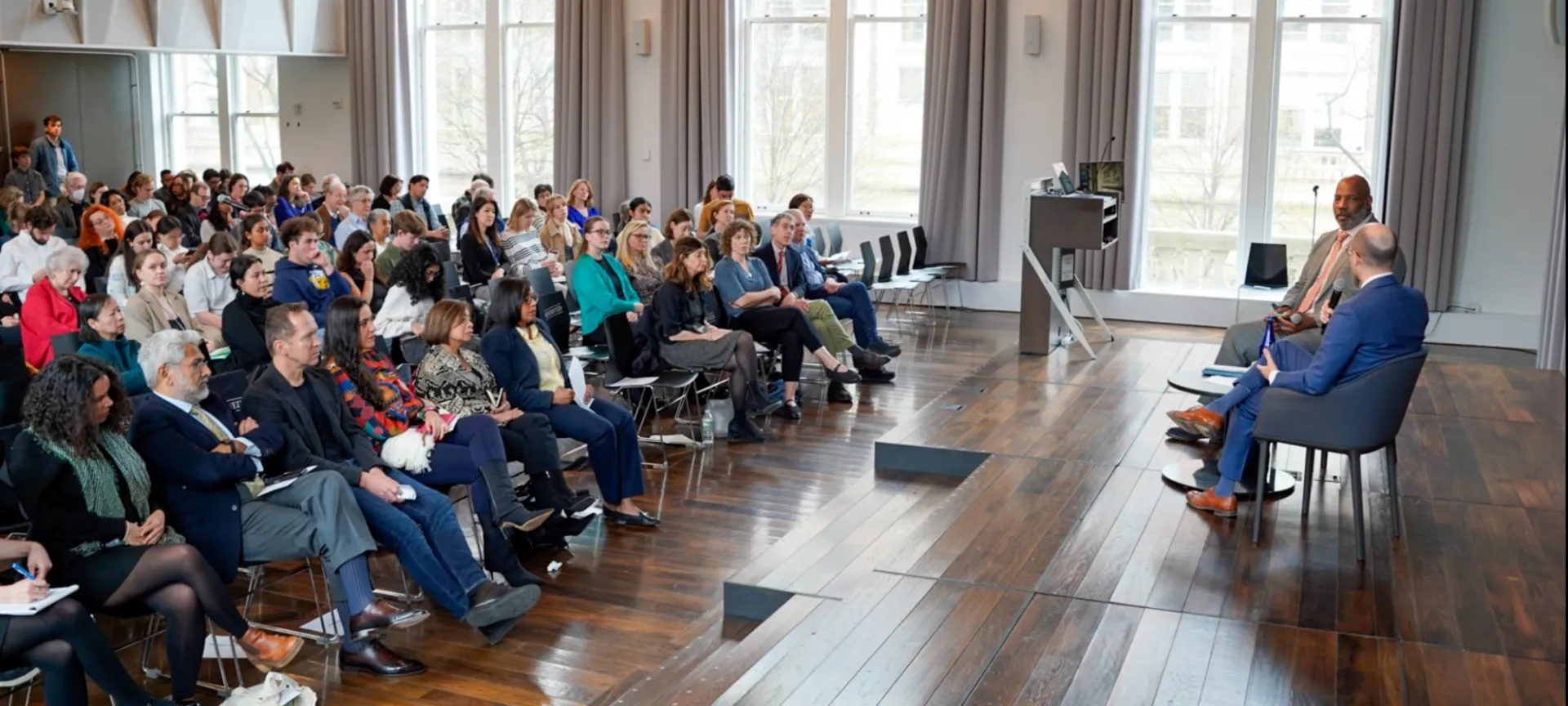
World Press Freedom Day 2025: AI’s Influence on Journalism and Public Discourse
At Columbia Journalism School, freedom of the press is not just a guiding principle — it’s a cornerstone of the institution’s mission and essential to a democratic society.
Each year, World Press Freedom Day serves both as a celebration of journalism’s crucial role and a reminder of the growing threats to press freedom around the globe.
In this spirit, Columbia Journalism School reaffirms its commitment to training the next generation of journalists and championing press freedom worldwide.
2025 World Press Freedom Day: “The Impact of Artificial Intelligence on Press Freedom and the Media”
The 2025 UNESCO World Press Freedom Day theme examines how artificial intelligence can both disrupt and enhance the fundamental right to information for citizens worldwide.
Aligned with this theme, the CJS2030 AI Initiative — part of Dean Jelani Cobb’s vision for the next decade — aims to position the school as a leader in exploring AI’s role in journalism through research, newsroom outreach, experimentation and ethical training.In addition, CJS centers are contributing expert insights on AI’s growing role in journalism, helping guide how newsrooms adapt to these emerging tools. The Li Center for Global Journalism, Tow Center for Digital Journalism and Craig Newmark Center for Journalism Ethics and Security each play a key role in providing resources to the J-School and the profession.
"Our center has been really adept at looking at some of the biggest threats to journalists and to press freedom when it comes to conflict," said Li Center Director Azmat Khan. "That means unprecedented killings of journalists. It means the detention of journalists around the world. And in an era of change in conflict and war, but also with technology that's rapidly evolving with the use of AI, we have to be more adept at anticipating what these threats to press freedom really can be, and how we can collaborate with others who are on the front lines of some of these battles."
As the technology evolves, these centers are also examining its implications for press freedom, transparency and public trust.
"Showing up in communities, talking to people. These are things that an AI is never going to be able to do," said Tow Center Deputy Director Dhrumil Mehta. "And then on the other end, when we're talking about acquiring data for instance, these tools have enabled us to much more quickly do these ambitious data collection projects for the purpose of informing the public."
Together, these efforts reflect a school-wide commitment to shaping an informed, ethical, and forward-looking approach to AI in journalism.
To learn more about CJS, AI and the fight for press freedom, view the resources below.
CJS + WPFD News & Resources
Additional Resources From Columbia Journalism Review
- The White House Press Corps Gears Up for Another Trump Term by Jake Lahour for the Columbia Journalism Review
- On Free Speech and Speaking Freely, by Jon Allsop for the Columbia Journalism Review
-
Biden’s Missed Opportunities on Press Freedom, by Jon Allsop for the Columbia Journalism Review